
What Is a Water Intrusion Investigation? How Experts Find the True Source of a Leak
Water Intrusion Investigation: How Experts Find Leak Sources | Blackstone Global
Learn how a professional water intrusion investigation identifies hidden leak sources through building envelope assessments, moisture testing, destructive testing, and root cause analysis. Discover how Blackstone Global supports construction defect investigations, forensic evaluations, expert witness services, and litigation support throughout California.
Water Intrusion Investigation: How Experts Find the True Source of a Leak
Water intrusion is one of the most common—and often most misunderstood—issues affecting residential, multifamily, and commercial buildings.
Whether supporting a construction defect investigation, forensic investigation, insurance claim, or construction litigation, identifying the true source of a leak requires far more than locating visible water damage.
Many property owners assume the source of a leak is located directly above the visible damage. In reality, that’s rarely the case. Water can travel through roofing systems, wall assemblies, framing members, waterproofing systems, and concealed cavities before it finally becomes visible inside a structure. By the time a stain appears on a ceiling or moisture becomes visible around a window, the actual point of entry may be several feet away.
A professional water intrusion investigation combines building envelope assessments, moisture testing, destructive testing, and root cause analysis to determine where water entered the building, how it traveled through the assembly, and what conditions allowed the intrusion to occur.
Because successful repairs begin with understanding the cause—not just the symptom.
What Is a Water Intrusion Investigation?
A water intrusion investigation is a systematic evaluation of a building designed to identify the source, extent, and cause of moisture-related issues.
Rather than focusing only on visible damage, experienced consultants evaluate how the building performs as a complete system. Roofing, waterproofing, windows, flashing, drainage, and exterior wall assemblies all work together to protect a structure from moisture intrusion. When one component fails—or when multiple components fail to work together as intended—the effects may not become visible until much later.
Water intrusion investigations are commonly performed when property owners observe:
- Water stains on ceilings or interior walls
- Leaking windows or doors
- Moisture around balconies or decks
- Deterioration of exterior finishes
- Recurring leaks that have resisted previous repairs
- Water-related damage following storms
The objective is not simply to document where moisture appears. A comprehensive forensic investigation seeks to determine how the water entered, why the condition developed, and what building systems contributed to the problem.
For attorneys, property owners, developers, HOAs, contractors, and insurers, understanding the root cause is often the first step toward making informed decisions regarding repair strategies, liability, or potential litigation.
Why Leaks Are Often Misdiagnosed
One of the most common misconceptions is that water enters a building exactly where the damage appears.
In reality, water follows the path of least resistance.
Once moisture enters a building assembly, it may travel along framing members, flashing details, waterproofing systems, insulation, or concealed wall cavities before becoming visible. This movement often makes the location of the leak very different from the location where damage is eventually discovered.
As a result, repairs based solely on visible conditions frequently fail to resolve the underlying issue.
One of the first questions experienced consultants ask isn’t “Where is the stain?” It’s “How did the water get here?”
Answering that question requires understanding how the building was designed, how its systems interact, and how moisture behaves under changing environmental conditions.
That’s why successful construction defect investigations don’t stop once moisture is found—they continue until the true source has been identified.
Common Sources of Water Intrusion
Water intrusion can originate from a variety of building systems, and the source isn’t always immediately obvious.
Common sources include:
- Roofing assemblies
- Window and door systems
- Building envelope transitions
- Waterproofing systems
- Balcony and deck assemblies
- Exterior wall penetrations
- Drainage deficiencies
- Flashing failures
In many investigations, consultants discover that multiple conditions contributed to the observed damage. A minor flashing deficiency combined with deteriorated sealant and inadequate drainage may create a pathway for water intrusion that would not exist if each component were performing properly.
Looking at a single building component in isolation often tells only part of the story.
This is why a building envelope assessment evaluates how the building performs as a complete system rather than focusing on one isolated area.
The Water Intrusion Investigation Process
Every building has its own history.
Construction methods, repairs, renovations, environmental exposure, and maintenance practices all influence how a building performs over time.
A comprehensive water intrusion investigation is designed to evaluate those factors through a systematic process that combines field observations, technical analysis, and evidence-based decision-making.
Document Review
Every investigation begins with understanding the building before evaluating the damage.
Consultants typically review available construction drawings, specifications, repair history, maintenance records, previous inspection reports, and project correspondence.
For construction defect investigations, additional documentation may include RFIs, submittals, change orders, construction photographs, warranty information, and inspection records. These documents often reveal valuable information about how the building was designed, constructed, modified, or repaired throughout its life.
Understanding the building’s history provides important context before stepping onto the property and frequently helps guide the remainder of the forensic investigation.
Site Inspection
A detailed site inspection allows consultants to evaluate existing conditions firsthand.
During the inspection, consultants document visible signs of moisture intrusion, deteriorated sealants, damaged flashing, drainage concerns, material distress, and other conditions that may contribute to water entry.
Just as importantly, the inspection evaluates how roofing systems, waterproofing assemblies, windows, exterior walls, and other building envelope components interact with one another.
Because visible damage is often only one piece of a much larger picture.
Depending on the project, these observations may become part of a broader forensic building evaluation, construction defect investigation, or expert witness assignment supporting insurance claims, mediation, arbitration, or construction litigation.
Moisture Testing
Not all moisture is visible.
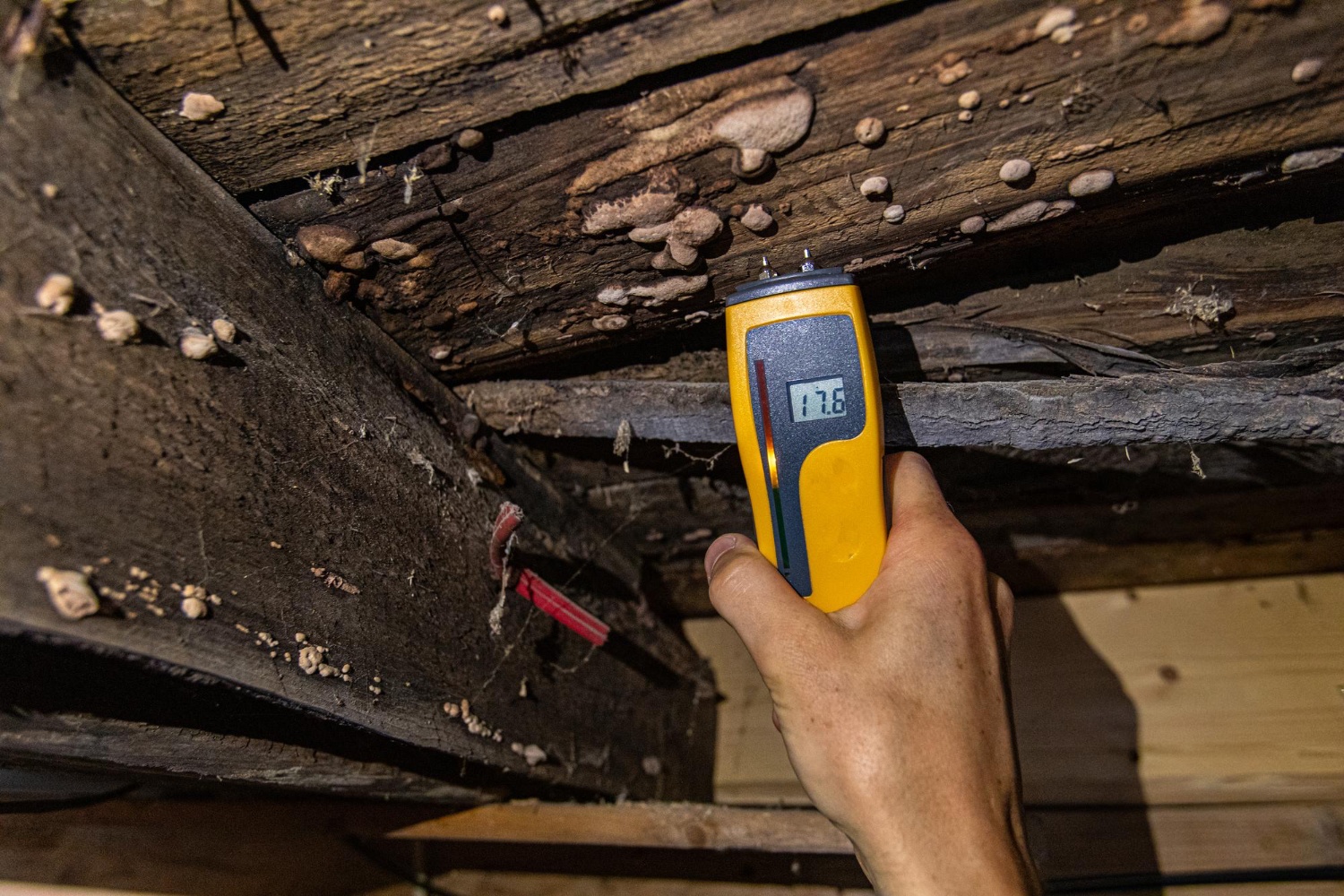
Water can remain trapped within wall assemblies, roofing systems, insulation, or structural components long before staining or deterioration becomes apparent. By the time visible damage appears, moisture may have already affected multiple building components.
To better understand existing conditions, consultants often use moisture meters, infrared imaging, and other non-destructive testing methods to identify concealed moisture and determine whether additional evaluation is necessary.
Moisture testing is frequently one component of a larger forensic investigation. While these diagnostic tools provide valuable information, they do not replace professional judgment. The results must always be interpreted within the context of the building’s design, construction methods, environmental exposure, and observed field conditions.
The information gathered during moisture testing helps consultants determine the extent of water intrusion, evaluate the performance of the building envelope, and identify areas that may require additional investigation or selective destructive testing.
Destructive Testing
In some cases, visual observations and non-destructive testing alone are not enough to determine the source of water intrusion.
When concealed conditions need to be evaluated, selective destructive testing may be recommended. This process involves carefully opening specific areas of the building to examine waterproofing systems, flashing details, framing, and other concealed components that cannot be evaluated from the surface.
When properly planned, destructive testing allows consultants to verify construction details, document hidden conditions, and identify deficiencies that may not be visible during a standard site inspection.
In many construction defect investigations, destructive testing also provides valuable documentation that supports repair recommendations, forensic evaluations, expert witness reports, and technical analysis used during mediation, arbitration, or construction litigation.
Although destructive testing is not necessary for every project, it is often one of the most effective ways to confirm the root cause of moisture intrusion when non-destructive methods cannot provide a definitive answer.
Root Cause Analysis
Finding moisture is only one part of the investigation.
The most important question is often why the condition developed in the first place.
Root cause analysis goes beyond documenting visible damage. It evaluates how the building was designed, how it was constructed, how various building systems interact, and what sequence of events allowed moisture intrusion to occur.
In many cases, there is no single cause.
Water intrusion may result from a combination of construction deficiencies, material deterioration, deferred maintenance, environmental exposure, building movement, or modifications made to the property over time.
As part of a comprehensive forensic investigation, consultants evaluate the available evidence to determine the underlying cause of the condition—not simply the location where the damage became visible.
By identifying the true cause of the problem, repair recommendations can address the source of the intrusion rather than repeatedly treating the symptoms.
Why Early Investigation Matters
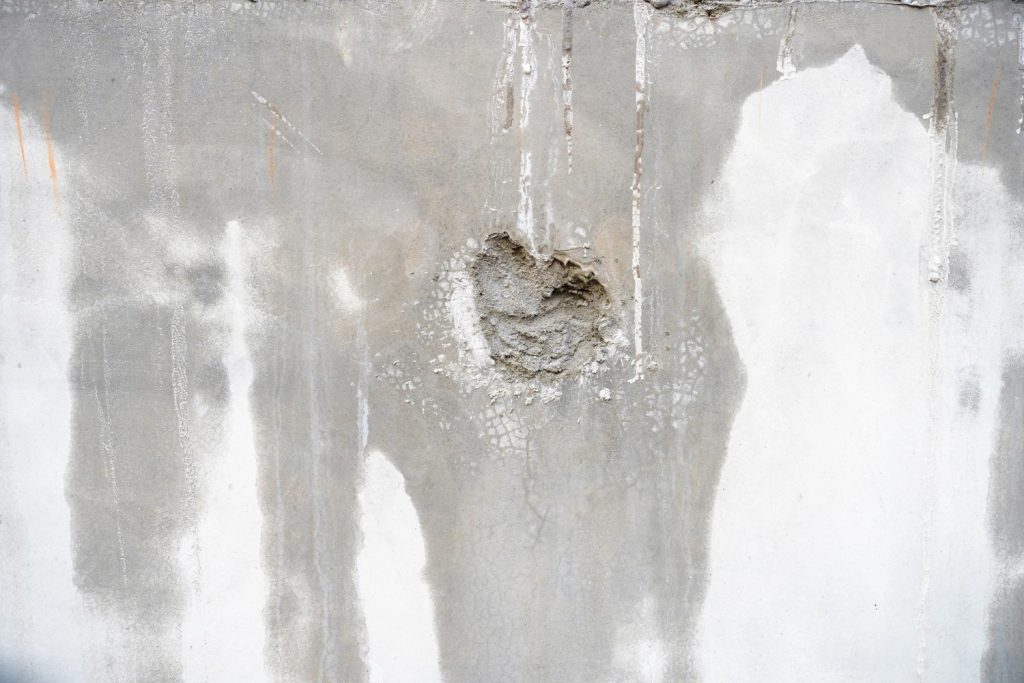
Water intrusion rarely resolves itself.
Once moisture enters a building assembly, it can continue affecting surrounding materials long after the initial leak occurs. Finishes, insulation, framing, sheathing, and other building components may deteriorate over time, increasing both the complexity and cost of future repairs.
Early investigation allows consultants to document conditions while evidence remains intact, identify contributing factors before they become more difficult to evaluate, and develop informed recommendations for repair.
For property owners, HOAs, developers, contractors, insurers, and attorneys, early evaluation also provides valuable information that supports better decision-making throughout the life of a project or construction defect claim.
When litigation is anticipated, early documentation may also help preserve evidence and establish existing conditions before repairs or additional deterioration alter the building.
Water Intrusion Investigation Services
Blackstone Global provides comprehensive water intrusion investigations, construction defect investigations, building envelope assessments, forensic building evaluations, destructive testing, expert witness services, litigation support, and construction consulting throughout California.
Our multidisciplinary team includes architects, licensed general contractors, building envelope specialists, glazing consultants, and construction professionals with decades of experience evaluating residential, multifamily, and commercial properties.
Every investigation is approached objectively and supported by careful observation, technical analysis, and extensive field experience. Rather than focusing solely on visible damage, our consultants evaluate how building systems interact to identify the true source of moisture intrusion and develop practical, long-term repair recommendations.
Whether supporting property owners, HOAs, developers, contractors, attorneys, or insurance professionals, Blackstone Global provides evidence-based consulting that helps clients better understand complex building performance issues and make informed decisions throughout every stage of a project or construction defect claim.
Related Blackstone Global Services
A water intrusion investigation is often one component of a broader building evaluation. Depending on the project, additional consulting services may include:
- Forensic Investigation
- Construction Defect Investigation
- Building Envelope Consulting
- Destructive Testing
- Expert Witness Services
- Litigation Support
- Reconstruction Consulting
- Construction Management
These services work together to help clients evaluate building performance, identify construction deficiencies, develop repair strategies, and support construction-related claims from the initial investigation through project completion.
Frequently Asked Questions
What is a water intrusion investigation?
A water intrusion investigation identifies where water entered a building, how it traveled through the structure, and what conditions allowed the intrusion to occur. Consultants use document review, site inspections, moisture testing, building envelope assessments, and, when necessary, destructive testing to determine the root cause of moisture-related issues.
Can water travel away from the visible leak?
Yes. Water often follows the path of least resistance through framing, insulation, waterproofing systems, and concealed wall cavities before becoming visible. The source of the leak may be several feet away from the location where damage is observed.
When is destructive testing necessary?
Destructive testing is recommended when concealed building components must be evaluated to confirm the source of moisture intrusion. It is commonly performed during construction defect investigations and forensic evaluations when visual observations and non-destructive testing cannot fully explain existing conditions.
Does every water intrusion investigation require destructive testing?
No. Many investigations can be completed using document review, site inspections, moisture testing, and other non-destructive evaluation methods. Destructive testing is recommended only when additional information is needed to evaluate concealed conditions or confirm the root cause of a problem.
How does a water intrusion investigation support construction litigation?
A professionally documented water intrusion investigation provides objective technical evidence that may support construction defect investigations, insurance claims, expert witness reports, mediation, arbitration, and litigation. Identifying the root cause of water intrusion helps attorneys, property owners, insurers, and construction professionals make informed decisions regarding repair strategies and liability.
Contact Blackstone Global
If your property is experiencing recurring leaks, moisture intrusion, or building envelope concerns, a professional water intrusion investigation can help identify the underlying cause before additional damage occurs.
Blackstone Global provides objective, evidence-based evaluations that help property owners, attorneys, HOAs, developers, contractors, and insurance professionals better understand building conditions and make informed decisions about repair, remediation, and long-term building performance.
To learn more about our water intrusion investigation, forensic investigation, construction defect investigation, destructive testing, or building envelope consulting services, contact Blackstone Global today.